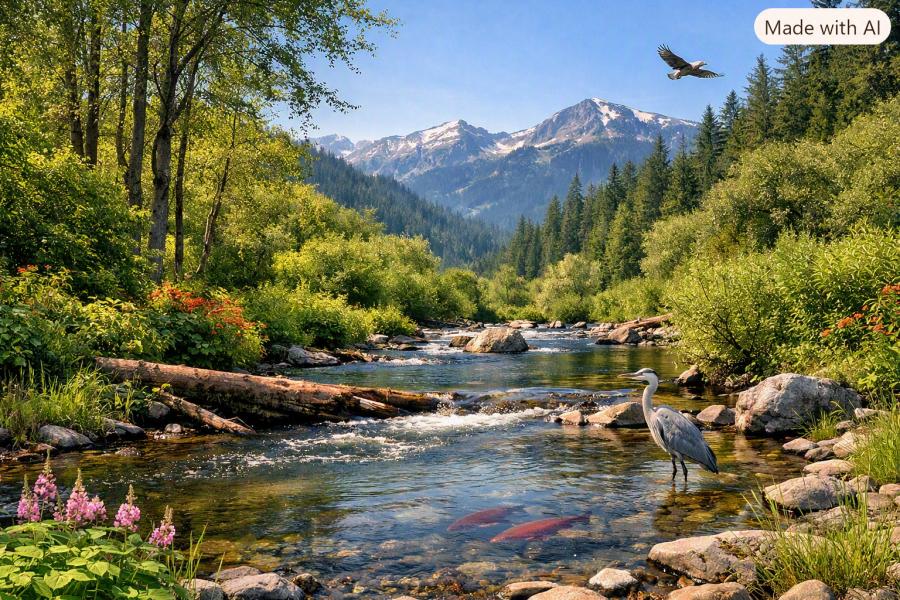
If you’ve ever walked along a creek in British Columbia—whether in the Fraser Valley, the Interior, or up the coast—you’ve probably noticed how different the vegetation looks right beside the water. The trees lean in a little closer, the shrubs grow thicker, and the ground feels cooler and softer. This strip of life hugging the creek is called riparian vegetation, and it’s one of the most important (and underrated) parts of our natural landscape.
As an environmental consultant, I often tell clients that if you want to protect water, fish, wildlife, and even your own property, start with the riparian zone. Here’s why.
Riparian vegetation acts like nature’s water filter. When rain falls or snow melts, water rushes downhill carrying soil, fertilizers, oils, and other pollutants. The dense roots and stems of riparian plants slow that water down, trapping sediment and absorbing contaminants before they reach the creek.
In BC—where salmon, trout, and countless aquatic insects rely on clean water—this natural filtration system is essential. Healthy riparian zones mean clearer water, fewer pollutants, and stronger fish populations.
Creeks naturally shift and reshape their banks over time. Without vegetation, this process speeds up dramatically. Bare soil erodes quickly, leading to slumping banks, property loss, and muddy water.
Riparian plants—especially BC natives like willow, red-osier dogwood, cottonwood, salmonberry, and sedges—have root systems designed to hold soil together. They anchor the bank, reduce erosion, and help maintain stable creek edges. For landowners, this means fewer headaches and lower long-term maintenance costs.
Riparian zones are biodiversity hotspots. Birds nest in shrubs, amphibians hide under logs, insects thrive in moist soils, and mammals use creeks as travel corridors. Even the shade from riparian trees plays a role: it keeps water cool, which is critical for salmon and trout that struggle in warm temperatures.
In BC’s warming climate, shaded creeks are becoming one of the most important climate‑resilience tools we have.
Salmon need cool, oxygen-rich water and stable gravel beds to spawn. Riparian vegetation helps maintain all of these conditions:
Shade keeps water temperatures low
Roots stabilize spawning gravels
Fallen leaves and branches provide nutrients and shelter
Insects from riparian plants fall into the creek, becoming food for juvenile fish
When riparian zones are damaged, salmon populations decline. When they’re restored, fish return—often within just a few seasons.
Riparian vegetation acts like a sponge. During heavy rains, it absorbs and slows water, reducing flood peaks. During dry periods, it releases moisture back into the soil and creek, helping maintain flow.
In BC, where extreme weather events are becoming more common, this natural buffering system is invaluable.
Riparian vegetation isn’t just “plants by the creek.” It’s a living infrastructure system that protects water quality, stabilizes banks, supports wildlife, and strengthens climate resilience. Whether you’re a landowner, a community member, or simply someone who loves BC’s natural beauty, protecting riparian zones is one of the most effective ways to safeguard our ecosystems.
All-Terrain Consulting Ltd. serving Vancouver, Burnaby, West Vancouver, North Vancouver, Belcarra, Cariboo Regional District, Surrey, Langley, Abbotsford, New Westminster, Mission, FVRD, Harrison Hot Springs, Hemlock Valley Ski Resort, Squamish-Lillooet Regional District (SLRD), Squamish, Whistler, Pitt Meadows, Galiano Island, Victoria, Saanich, Gulf Islands, Sechelt, Gibsons, Chilliwack, Agassiz, West Kelowna, Campbell River, Vancouver Island, Okanagan, White Rock, Pitt Meadows, Maple Ridge, Port Coquitlam, and Coquitlam.
Copyright 2026, All-Terrain Consulting Ltd. • Website by Atef Design
